
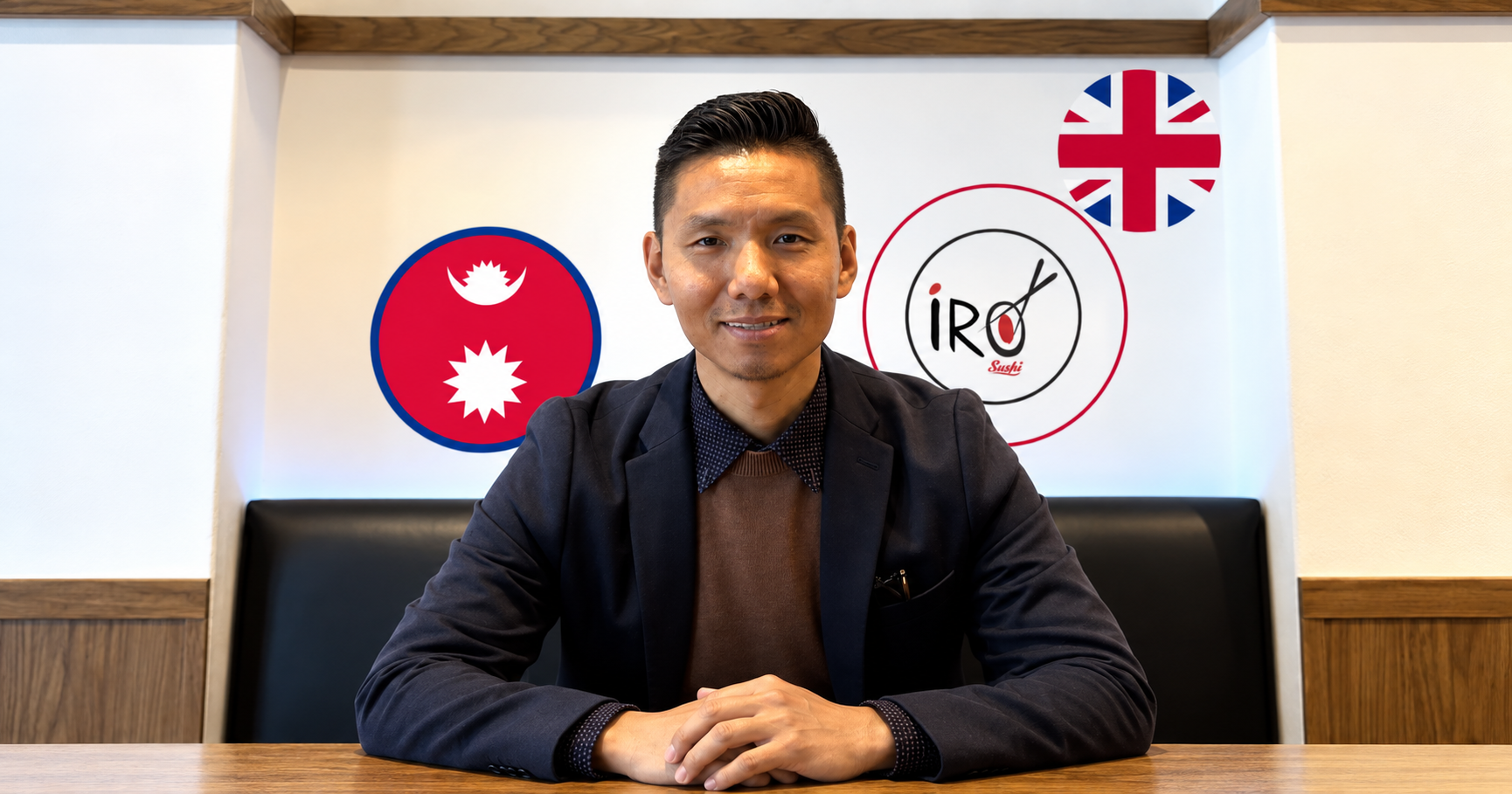
The number is striking: around 30 IRO Sushi outlets. But the beginning of Chhong Norbu Sherpa’s UK journey looked nothing like a restaurant chain. When he arrived in Britain in 2009, he spent roughly eight months searching for work and relied on help from friends. It was a difficult start for someone who had already watched two other plans fall away.
From Dolakha to an uncertain London
Sherpa grew up in Dolakha, Nepal. He had hoped to join the British Gurkhas. When that did not work out, he looked towards Australia, but changes to the visa process disrupted that plan too. The UK became the next route, and he came as a student in 2009.
Finding his feet took time. After months without a job, he began working as a sushi chef while continuing his studies and trying to repay debts. The work gave him a skill he could practise every day. Eventually, it gave him an idea he could build on.
Five hours in a rented kitchen
In 2014, Sherpa put about £5,000 into starting IRO Sushi, according to published accounts of his journey. He did not begin with a polished high street restaurant. He rented kitchen time in the evening, worked elsewhere during the day and made sushi for online orders after his shift. The first team was small: two employees and a driver.
That detail says more about the early business than the outlet count does. He had to work within the hours and space available, test whether customers wanted the food, and keep going long enough to move into a shop of his own. His first high street site followed in 2015.
Growing beyond the first shop
Further outlets followed in London, and franchising became a way to expand the IRO Sushi name. The business now has around 30 UK outlets, according to recent reporting. That is a long way from a rented evening slot and a tiny team, but the growth happened over years rather than in one sudden leap.
Sherpa’s story is familiar in one respect to many Nepalese people building a life abroad: the first job, the pressure of studies and debt, and the need to adjust when the original plan fails. What makes his journey unusual is the scale of what he built from the skill he learned along the way.
The lesson in the early years
It is easy to see a chain of restaurants and miss the months when there was no work at all. IRO Sushi began with limited money, borrowed kitchen time and people willing to take the first orders. For anyone starting out in the UK, the most useful part of this story may be that the first step did not look impressive from the outside. It was simply something Sherpa could do well, make available to customers and improve from there.